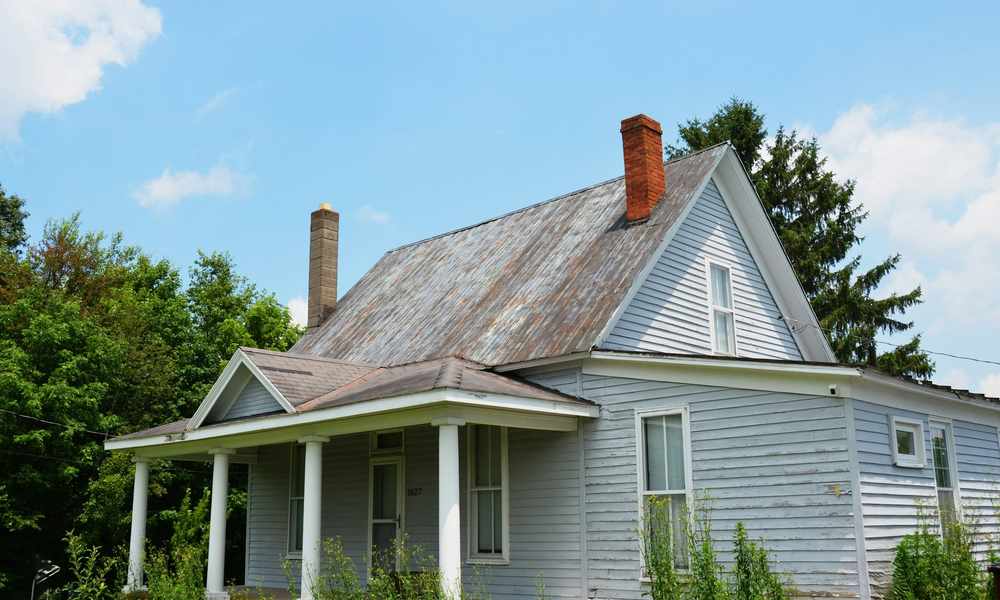
Warping, rot, rising energy bills, and peeling paint — when repair isn't enough, and how our licensed, insured crew can help you decide.
Visible Damage and Rot
Cracked, warped, loose, or rotting boards are the clearest sign something is wrong. Soft spots you can push a screwdriver into mean water has already gotten in and started breaking the material down from the inside — by the time a board feels spongy, the damage usually goes deeper than what you can see on the surface. Fungus, mold, or peeling paint on the siding are also red flags that moisture is trapped somewhere it shouldn't be, even if the board underneath still looks solid.
- Warped, cracked, or loose boards
- Soft or rotting spots
- Mold, fungus, or peeling paint
Warping and Buckling
Warping and buckling look similar but usually point to different causes. Warping — a board twisting or cupping out of its flat plane — is often moisture-related, especially in wood siding that's absorbed water unevenly. Buckling — a rippled or wavy look, especially on vinyl — is more often a sign of heat stress or an installation that didn't leave the material room to expand and contract with temperature. Either way, a section that's visibly out of alignment with the boards around it has already failed structurally, even if it's not leaking yet.
The Less Obvious Signs
Rising energy bills can point to failing siding and insulation letting conditioned air escape, especially if nothing else about your home's heating or cooling use has changed. And if you're repainting every few years just to keep the exterior looking presentable, that's a sign the current material isn't holding up on its own — modern siding, correctly installed, should go far longer between paint jobs, or need none at all.
- Energy bills climbing with no other explanation
- Needing to repaint every few years just to keep up appearances
- Caulk that's cracked, shrunk, or pulled away from trim and seams
- Nail heads or fasteners visibly popping out of panels
What a Professional Inspection Actually Checks
A proper siding inspection goes well beyond a walk around the yard. We look at every elevation of the house, not just the side that looks worst, since sun exposure and drainage patterns mean damage often shows up unevenly. We check for soft spots by hand at seams, corners, and anywhere water tends to collect — around window and door trim, at the bottom courses near grade, and at any roofline or deck intersection. We also look at the condition of flashing and caulking at those same transition points, since a failure there is usually what let water in behind otherwise intact siding in the first place.
Where damage looks more than surface-deep, that can mean carefully checking behind a section of siding to see whether the sheathing or framing underneath has already been affected, rather than guessing from the outside. That distinction — cosmetic wear versus damage that's reached the structure — is usually the difference between a repair and a full replacement, and it's not something you can reliably judge without getting a closer look.
The Cost of Waiting
We won't quote a specific dollar figure here, since every home and every scope of damage is different — but the general pattern holds across almost every exterior we've been called out to look at. A small area of trapped moisture, caught early, is usually a contained repair: replace the affected boards, correct whatever let water in, and move on. Left alone, that same moisture keeps working — spreading along the wall, reaching more boards, and eventually affecting the sheathing or framing behind the siding, which turns a localized repair into a much larger project. Waiting doesn't make a moisture problem stay the same size; it makes the eventual fix bigger.
Repair or Replace?
Isolated damage — a single cracked board, one section with popped fasteners, a small area of caulk failure — can often be repaired without touching the rest of the siding. But when problems are widespread across multiple elevations, when rot has set in behind more than one section, or when the siding is simply worn out and past its useful life, replacement protects your home more reliably than another round of patch repairs, and it pays back in curb appeal and efficiency too. We'll give you an honest assessment of which situation you're in — request a free inspection below.